
In short
A child may prefer movement, building, looking at a book, or being left to their own game. You do not need to identify a reason before accepting that the page is not interesting right now.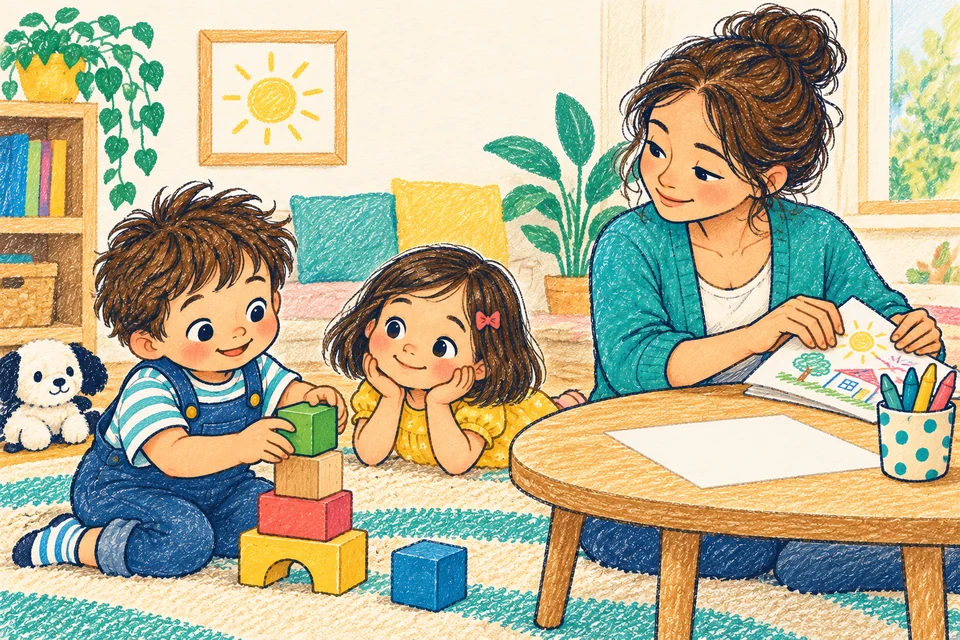
Treat “no” as information
A child may prefer movement, building, looking at a book, or being left to their own game. You do not need to identify a reason before accepting that the page is not interesting right now.
Offer one alternative: “We can look at the picture, or leave it for later.” Avoid repeating the invitation until the child agrees.
Change one part of the activity
If your child is interested in the story but not the sheet, read it aloud without asking for marks. If they want to draw their own scene, provide blank paper. A few lines, circles, or scribbles can be the whole activity.
Open-ended drawing has space for decisions that a pre-drawn scene does not. NAEYC’s discussion of creativity supports leaving room for exploration rather than directing every result.
Make room for other play
There is no requirement to complete a page every day or work through stories in order. The American Academy of Pediatrics describes the value of varied, child-led play. A printable can be one option among many ordinary activities.
Use safe tools appropriate to the child and supervise as needed. Do not turn access to preferred play into a reward for finishing a sheet.
Leave the ending ordinary
“Not today” is a complete ending. Put the sheet aside and continue with the day. If the child returns to it later, you can begin again without a reminder about having refused it earlier.
Sources and scope
These sources inform the general principles above. They do not test or endorse Tihomir. This article offers everyday activity ideas, not clinical guidance.