
In short
The 2–3 version has shorter read-aloud text and a small invitation such as pointing or making marks. The 4–6 version adds a little more story and an optional idea to draw or discuss. These are starting points, not ability tests.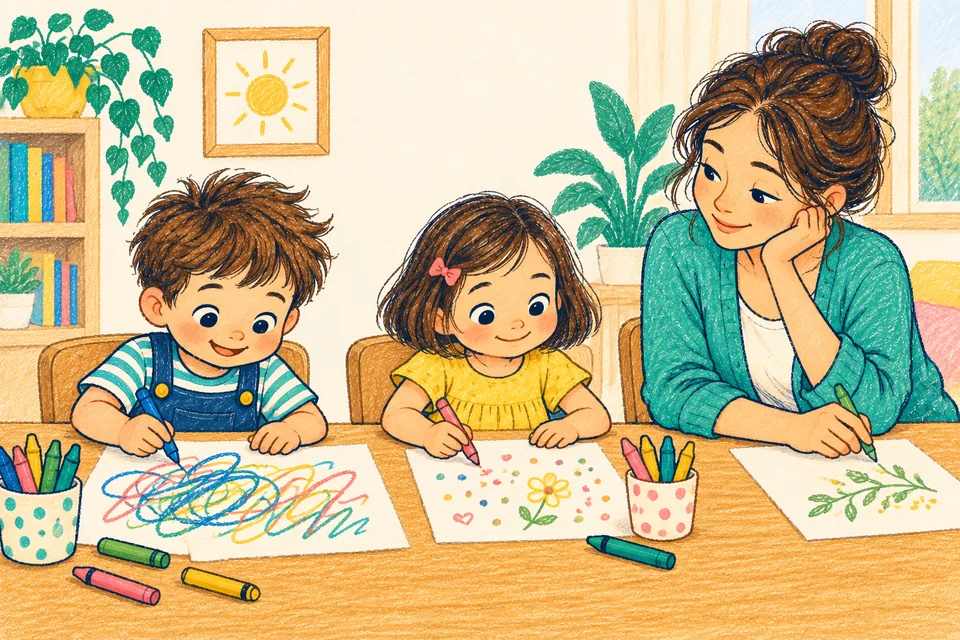
Choose a starting point for each child
The 2–3 version has shorter read-aloud text and a small invitation such as pointing or making marks. The 4–6 version adds a little more story and an optional idea to draw or discuss. These are starting points, not ability tests.
A child can use either version with an adult’s help. Read the simpler text for everyone first if that keeps the shared moment comfortable.
Use separate sheets when useful
Give each child room to choose colors and marks. One may want the printed scene while another prefers blank paper. Avoid asking the older child to demonstrate the right way, or comparing how much each child has finished.
A shared theme does not require the same task. You can notice each child’s choices without ranking their drawings.
Keep the conversation open
An older child might suggest what happens next. A younger child may point to a character. Answer both without requiring equal turns or equal amounts of speech. If children want different games, they can stop at different times.
The AAP’s overview of play describes varied ways children play as they grow. It is a general context for offering flexible options, not a promise that these age labels predict an individual child’s needs.
Make the next step easy
You can leave two sheets out, put both away, or return to one later. Choose safe materials for the youngest child present. Let the page remain unfinished when someone has had enough.
Sources and scope
These sources inform the general principles above. They do not test or endorse Tihomir. This article offers everyday activity ideas, not clinical guidance.